

Corporations

Profit for Producers.
Proof for Corporations.
C-Lock creates value across the entire sustainability chain.
Every other sustainability program asks the producer to do something for the corporation's benefit. C-Lock makes the producer more profitable — and the corporation gets verified supply chain data as a byproduct. That is the only model that scales without a subsidy. It's a winning scenario for both parties.
The only platform that does both
Every other program asks the producer to give something up. C-Lock pays them to participate.
Two outcomes from one deployment: the producer gets more profitable, and the corporation gets verified supply chain data as a byproduct — the only model that scales without a subsidy.
Why it matters to your organization
Seven Reasons to Build Your Sustainability
Strategy on C-Lock Data.
Regulatory
Compliance is accelerating — verified data is no longer optional
SB-253 is live. CSRD is live in the EU. LSRSG goes into effect January 2027. Every framework — SBTi, CDP, TCFD — is moving from modeled estimates to required primary measured data. The window for unverified reporting is closing on a known timeline.
C-Lock produces MRV-grade individual animal enteric emissions data. Measured. Peer-reviewed. Auditable. The only platform that satisfies every current and pending framework simultaneously.
Primary Data
Primary data is the scarcest asset in your supply chain
Every sustainability program currently operating uses modeled estimates. Less than 10% of feedlot animals had EID tags in 2021. The corporation that secures primary measured data first owns the most defensible position in its peer group.
C-Lock operating across commercial herds produces exactly the phenotype data needed — matched with genomics, it becomes the foundation for the next generation of feed efficiency and methane EPDs validated at scale.
Genetics
The next generation of genetic selection needs phenotypes that don't exist yet
Genetic improvement is the most permanent lever for reducing livestock environmental impact. But selection for feed efficiency and methane traits requires individual animal phenotype data at commercial scale — not research station data from 20 animals. The breeding program that closes this gap first defines the market for the next decade.
C-Lock makes producers more profitable by identifying which animals are losing money — today. The producer pays for the hardware through feed efficiency gains. The corporation gets verified emissions data as a byproduct. No subsidy required.
Farm Economics
Sustainability that requires a subsidy will never scale
Every current program asks the producer to change behavior and pays them to do it. The fundamental problem: there is a disconnect between long-term corporate value creation and short-term farmer ROI. Any solution that doesn't provide immediate economic value to the producer will not achieve the adoption rate needed to move supply chain numbers.
C-Lock makes producers more profitable by identifying which animals are losing money — today. The producer pays for the hardware through feed efficiency gains. The corporation gets verified emissions data as a byproduct. No subsidy required.
Claims
A reduction claim requires a measured baseline — not a modeled one
To credibly claim an emissions reduction you need three things: a measured baseline, a measured change, and a verification methodology. Supply chain reduction claims in beef and dairy are currently built by updating one model with inputs from another model. When a regulator or investor audits that chain, there is no measurement behind any of it.
C-Lock establishes a measured individual animal baseline from day one. When a practice, feed additive, or genetic selection reduces enteric emissions, C-Lock measures the actual reduction — not the modeled prediction of one.
Competitive
Verified sustainability data is a competitive asset — not just a compliance cost
Retailers are writing emissions reduction into supplier agreements. Capital markets are pricing climate risk into agricultural supply chain valuations. The corporations that can demonstrate verified, auditable supply chain emissions data will command better contract terms and lower cost of capital.
C-Lock data can be expressed per unit of hot carcass weight and allocated across product cuts. That is a product label claim with a measurement behind it — the first corporation to make that claim with measured data owns the premium market position.
Research
The microbiome connection is an emerging partnership & opportunity
Microbiome-driven breeding — using microbial gene abundance as a phenotype for genomic selection — requires individual animal rumen data at commercial scale. C-Lock's sub-second gas waveform data and H₂ patterns are directly relevant to rumen microbiome characterization. This data class does not exist anywhere else at commercial scale.
C-Lock's archive of 1,400+ unique animals with matched waveform data is a research partnership asset with no equivalent in the market. The organization that establishes this partnership first creates a data moat that compounds with every additional animal measured.
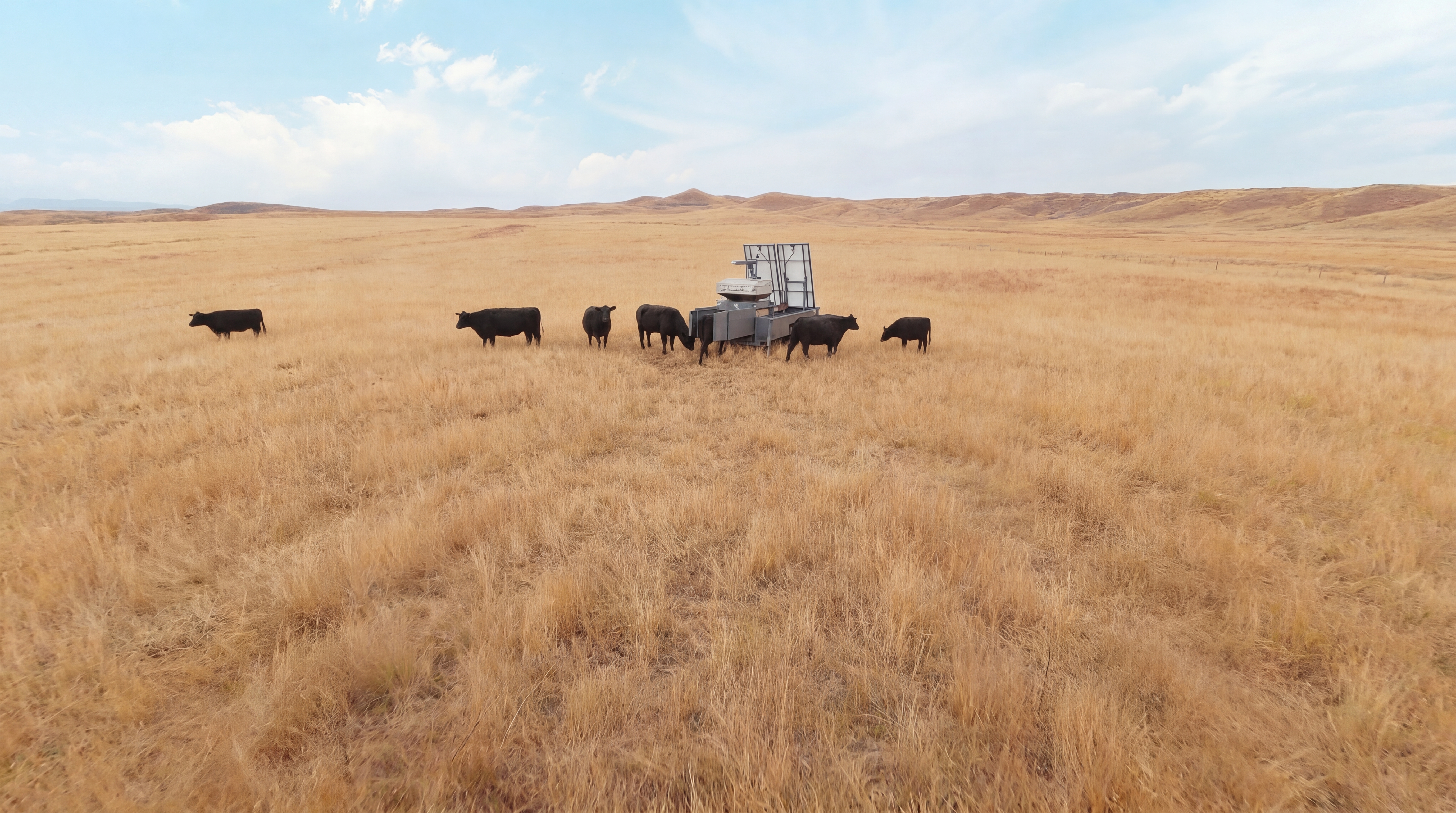
Measured at the source
Primary measured data is the scarcest asset in your supply chain. C-Lock produces it at commercial scale.
What you need. What exists.
Three ways to get a number. Only one is measured.
Estimation models and concentration sensors each fall short of what regulators, investors, and genetic programs now require. C-Lock is the only globally standardized and calibrated option.
| Requirement | Estimation models | Concentration sensors | C-LockFlux measurement |
|---|---|---|---|
| Individual animal emissions | Herd averages only | Relative ranking only | Grams per animal, per day |
| MRV-grade verification | Model outputs | Not verifiable | Within 1% of lab chambers |
| Verified Scope 3 primary data | Estimated inputs | Partial | Measured at source |
| Phenotypes for genetic selection | Population averages | No O₂, no RQ | CO₂, CH₄, O₂, H₂ per animal |
| Measured reduction baseline | Modeled baseline | Cannot establish baseline | Continuous individual measurement |
| Farm-level profitability signal | Compliance only | No economic output | Daily IOFC or CGI per animal |
| Self-funding producer adoption | Subsidy required | No ROI signal | Profitable without subsidy |
| Defensible product label claims | Not verifiable | Concentration ≠ emissions | Per kg HCW, auditable |
Built for Companies That Need Proof, Not Estimates
We work with processors, co-ops, food companies, and retailers who need verified primary data — and are done explaining to auditors why their Scope 3 numbers are built on assumptions.